An alternative way of managing underperformance
- Phil D'Adamo

- Mar 10
- 2 min read
Leaders expect staff to perform at a certain standard.
To manage this, organisations rely on performance management systems: job descriptions, policies, procedures, guidelines, performance plans, training and supervision.
When that standard is not met, underperformance is managed. Activities like:
• More training
• An underperformance plan
• Termination
All reasonable leadership responses.
This story of Bette Nesmith Graham offers an alternative way of thinking about managing underperformance.
In the 1950s, Graham worked as a secretary. Her typing wasn’t strong. Mistakes required complete retyping of the page. As a single mother in her early 20s, losing her job was a very real possibility.
If necessity is the mother of invention, frustration and the risk of losing a job forced Graham to adapt.
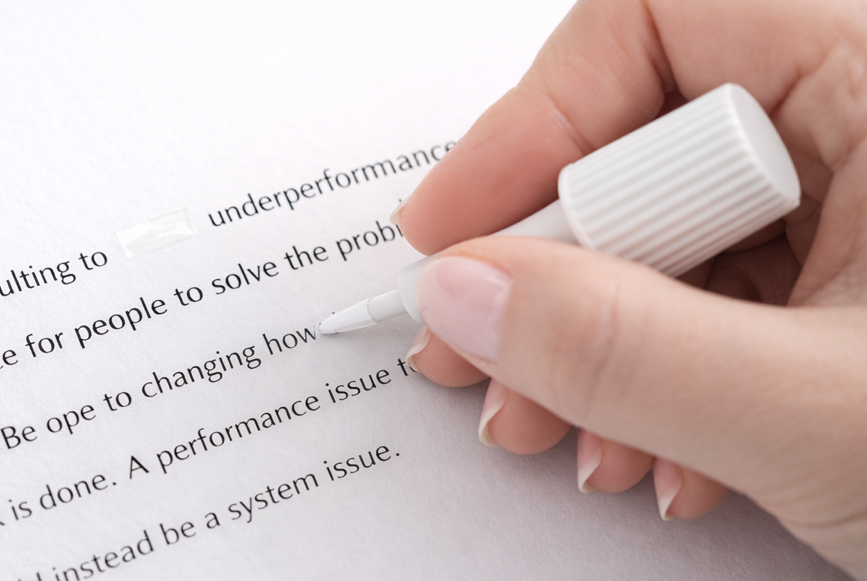
Unable to correct errors on a typewriter, Graham experimented with fast-drying white paint to cover typing mistakes rather than retyping the entire document. It worked.
She was eventually fired from her secretarial job because her side project was starting to take off, a moment that forced her to focus on her invention full-time.
That workaround became Liquid Paper, sold in 1979 for $47.5 million.
Graham wasn’t trying to innovate. She was trying to save her job.
The lesson for leaders is this:
Before defaulting to standard underperformance responses, create space for people to solve the problem themselves. Be open to changing how the work is done. A performance issue could instead be a system issue.
Not every underperformer will be Bette Nesmith Graham.
But they just might be the person who helps transform your business, save you money or unlock unexpected value. Give it a try and let me know how you go.